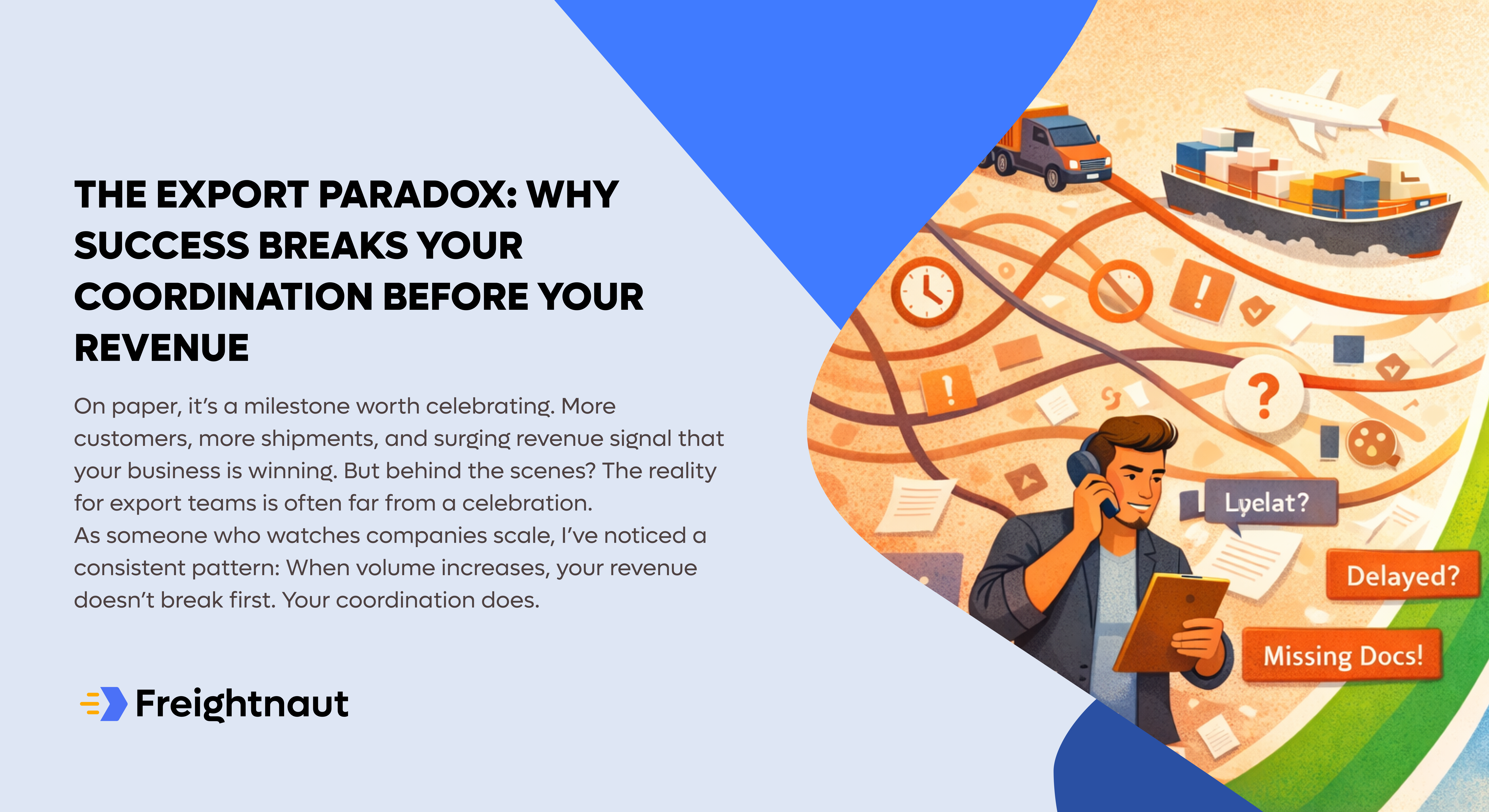
Export growth is a double-edged sword.
On paper, it’s a milestone worth celebrating. More customers, more shipments, and surging revenue signal that your business is winning. But behind the scenes? The reality for export teams is often far from a celebration.
As someone who watches companies scale, I have noticed a consistent pattern: When volume increases, your revenue doesn’t break first. Your coordination does.

The Trap of "Manageable" Early Growth
In the beginning, export operations run on familiarity.
Communication is informal (a quick Slack or a desk-side chat).
Processes are manual (spreadsheets and email folders).
Issues are handled through personal relationships.
This phase creates a dangerous sense of confidence. You think: "If we can handle 10 shipments this way, we can handle 100."
But scale doesn't just add more work. It adds exponential complexity.
Where the Cracks Appear: The Handoff
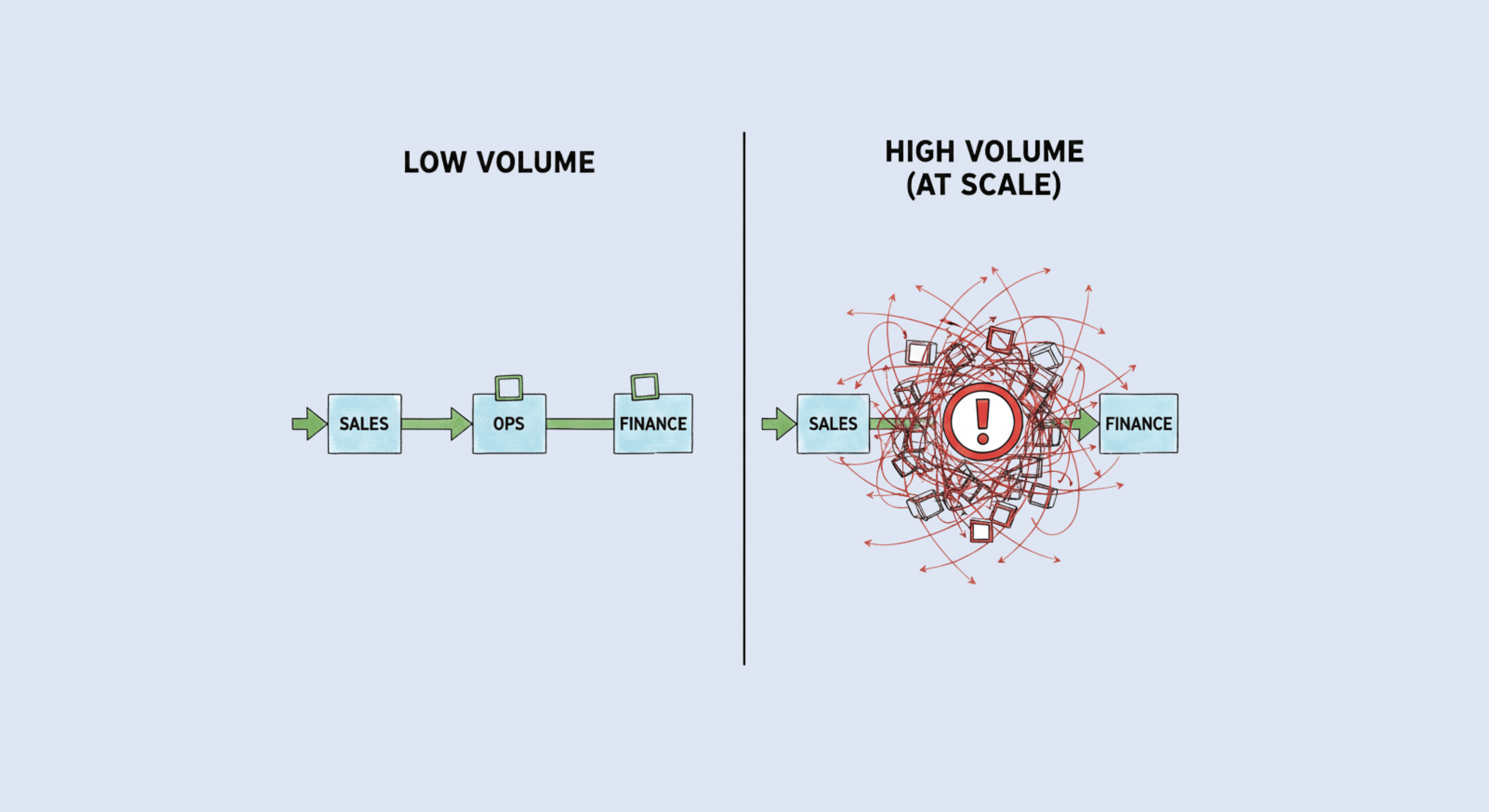
As volume grows, more "links" are added to the chain. Sales, operations, documentation, and finance all need to be in sync. Without clearly defined digital handovers, ownership starts to blur.
Tasks don’t actually disappear when they are missed; they turn into "The Follow-up Culture."
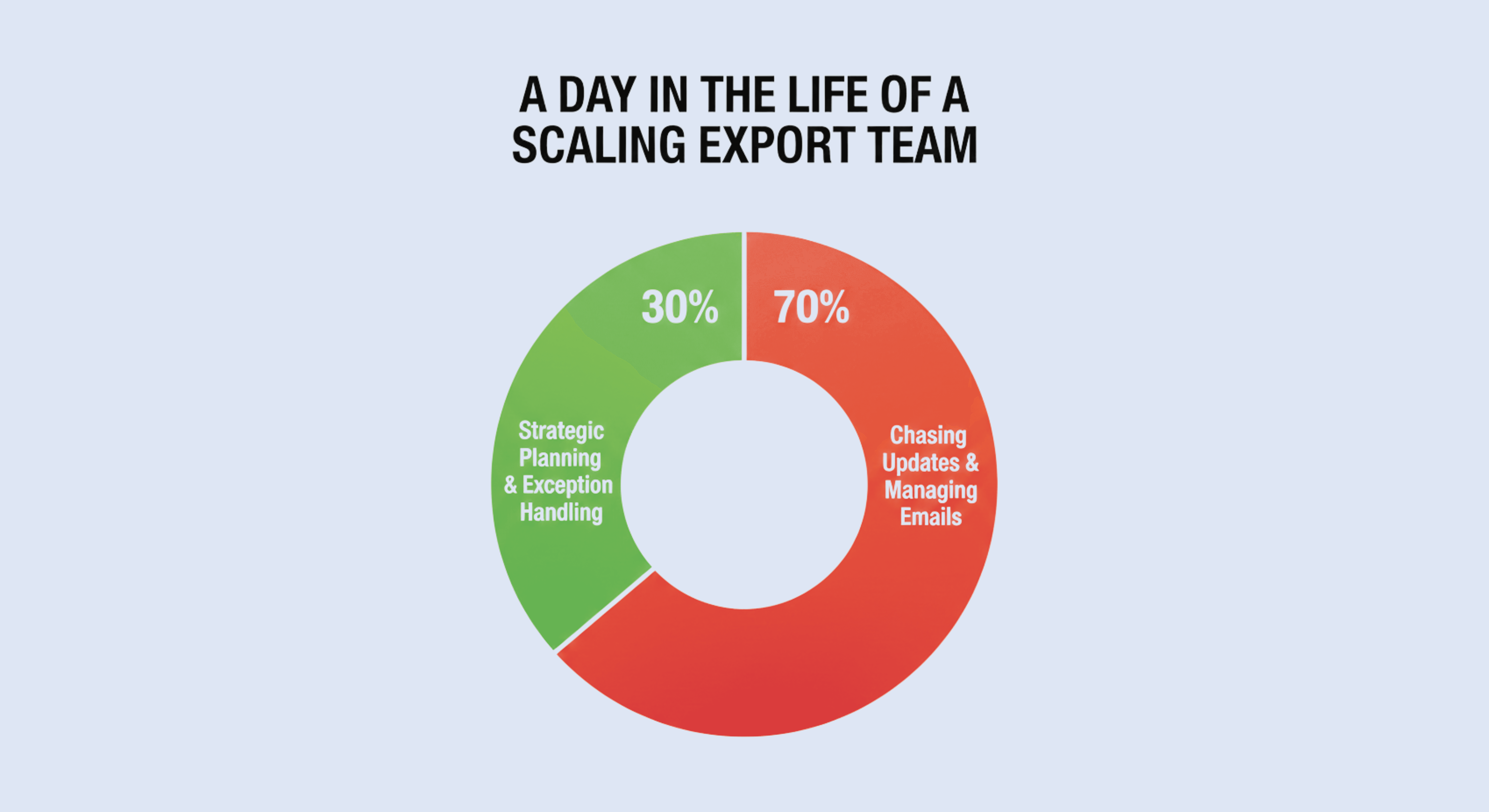
You know you have hit this wall when your team spends 60% of their day asking:
"Has the booking been confirmed?"
"Where is the latest version of the commercial invoice?"
"Is this shipment cleared, or is it sitting at the port?"
When follow-ups replace productivity, you aren't moving freight anymore you're just moving emails.
Growth Doesn't Create Problems; It Reveals Them
It is a common misconception that scaling causes operational friction. In reality, growth simply acts as a spotlight.
Those "minor" process gaps a missing document here, a manual data entry there are manageable at low volumes. At scale, those gaps become craters. They lead to compliance risks, costly delays, and, eventually, team burnout.
Designing for Sustainable Growth
Scaling your exports isn't about hiring more people to send more emails. It’s about building a system that can handle complexity without adding chaos.
To grow sustainably, you need:
Shared Visibility: One source of truth for the whole team.
Defined Ownership: Knowing exactly who has the "ball" at any given time.
Reduced Handoffs: Automating the transition of data between departments.
Stop Chasing Updates, Start Moving Shipments
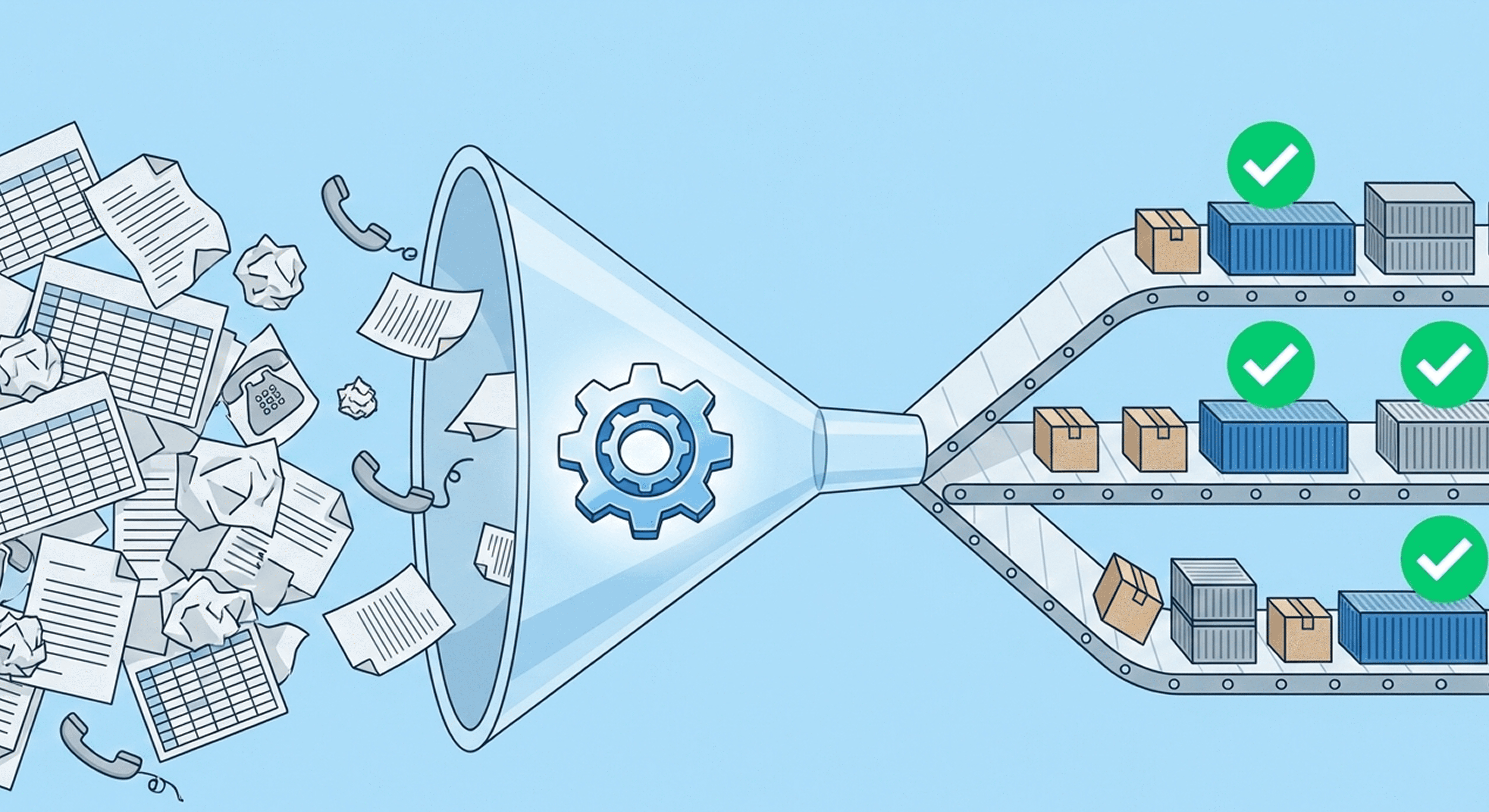
At Freightnaut we believe sustainable export growth starts with strong coordination. When processes are built to scale teams spend less time chasing updates and more time moving shipments forward with confidence.
Scaling isn't just about increasing shipment capacity; it's about designing processes that handle complexity with confidence. We help teams replace "follow-up culture" with structured coordination, ensuring that as your volume scales, your clarity stays intact.
Is your team spending more time on emails than on execution? Let's talk about building a workflow that actually scales.